Interview: MRANTI uses national priorities to guide park and commercialisation plans
2026
The Edge
Read More

This article first appeared in Digital Edge, The Edge Malaysia Weekly on September 14, 2026 - September 20, 2026
The Malaysian Research Accelerator for Technology and Innovation (MRANTI) is testing a framework to align research and commercialisation efforts with national priorities.
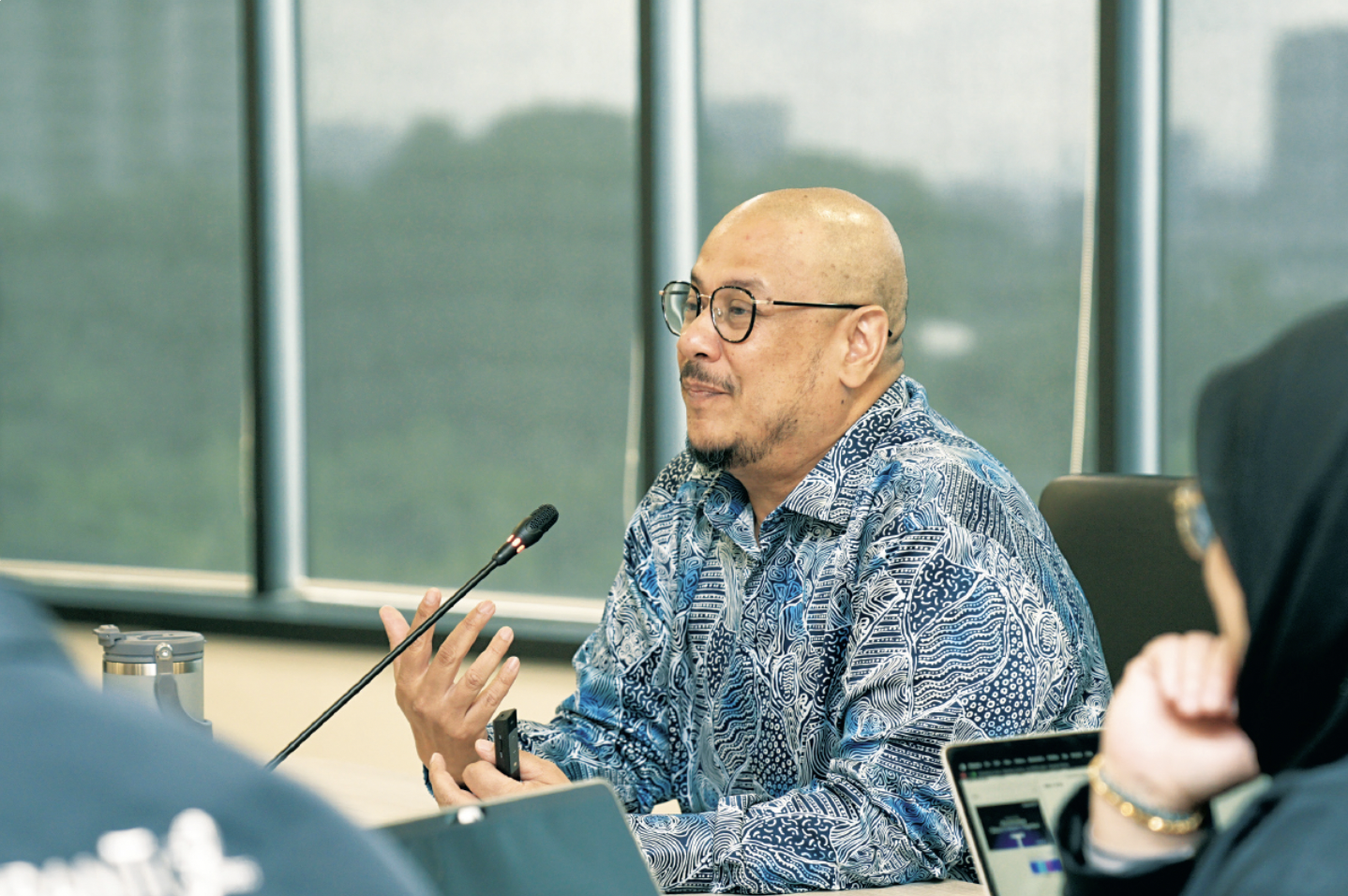
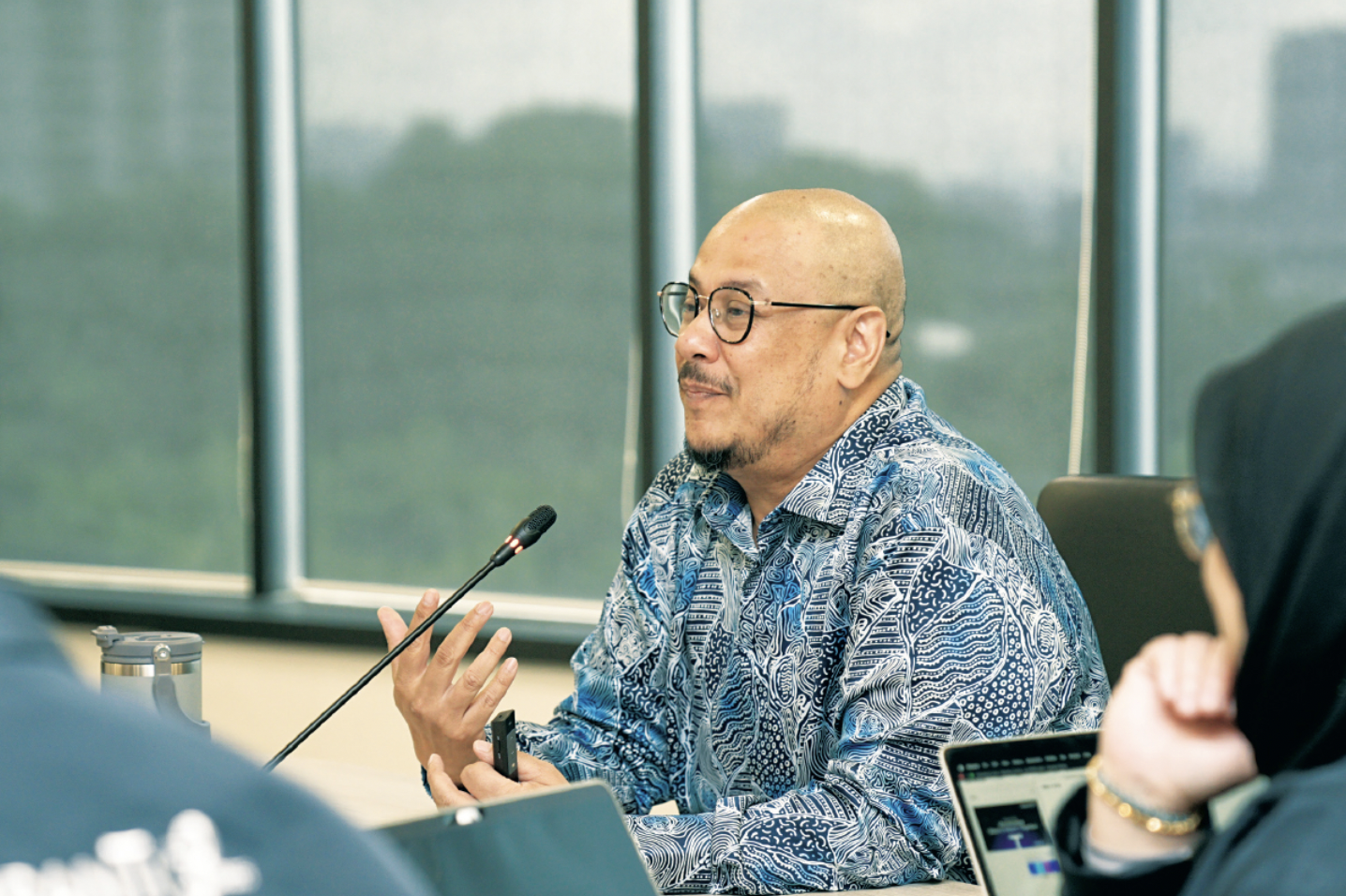
CEO Ashran Ghazi, who stepped into the role in December 2025, says the approach is intended to prevent research and commercialisation efforts from being scattered across disconnected projects, while ensuring that technologies are developed in response to an actual need and have a potential customer.
The framework could be applied to challenges ranging from improving care for an ageing population to making transport systems more efficient. Using the framework, MRANTI aims to bring ministries, companies, researchers, funders and regulators together to identify, develop, test and commercialise the technologies needed to address each challenge.
Some of this work could take place at MRANTI Park, where the agency has launched request for proposals (RFPs) seeking investment in new research, testing and commercial facilities.
MRANTI has presented the proposed framework to the National Science Council (NSC), chaired by Prime Minister Datuk Seri Anwar Ibrahim, which endorsed the agency’s plan to test and refine the framework.
The agency is due to revert later this year on whether it has produced a workable model that can be applied to other national challenges.
“By November or December, I need to present on what the conversations are and if there is a model that can potentially be replicated. If it can, then this is our aspiration at MRANTI. Every time there is a Malaysia plan, you can always dissect that and bring the private sector on board, run in parallel and work the whole value chain,” says Ashran.
The agency aims to establish at least one, and possibly more, small-scale proofs of concept by the end of the year.
Healthcare has been selected as the first test case. Over the remainder of the year, MRANTI will work through the details of the model, test whether it can structure viable arrangements with private-sector partners, and refine the participants, incentives and processes required before attempting deployment at scale.
The healthcare framework identifies an ageing population, the growing burden of chronic diseases, fragmented health data and high treatment costs as problems that need to be addressed. Its initial test will focus more on preventive healthcare and ageing.
Possible solutions identified by MRANTI include affordable digital health insurance, the prevention of non-communicable diseases, home monitoring and health data platforms, and technologies and care models for older people.
MRANTI has held preliminary discussions with digital health company Naluri Hidup Sdn Bhd and explored bringing in a takaful or insurance partner to determine whether preventive care services can be delivered through a commercially viable model.
The agency has also approached Subang Jaya Medical Centre about participating in the initiative. The hospital had previously bought and deployed a remote-monitoring kit developed by an innovator working with MRANTI.
MRANTI also met Universiti Putra Malaysia’s Malaysian Research Institute on Ageing and requested it to provide the research and specialist knowledge needed to guide the work on care for older people.
The intention is to test whether these different participants can be organised around a common outcome, with companies creating demand, researchers developing the required technologies and MRANTI helping the solutions move through testing, regulation and adoption, points out Ashran.
If the approach proves workable, MRANTI plans to adapt it for other national priorities such as food security, agriculture, transport and logistics.
The agency begins by identifying a problem affecting the country and the outcome the government wants to achieve. This could range from improving care for an ageing population and reducing the burden of chronic diseases to making transport and logistics more efficient.
“I’m trying to position MRANTI to be more demand-driven. We are going to be the demand activator. So, a national mission is one way of creating demand,” says Ashran.
MRANTI would then approach the ministry responsible for the issue and ask it to take ownership, define the scope and set the targets. In healthcare, for example, the Ministry of Health would need to agree to lead the work on preventive healthcare and ageing before MRANTI proceeds.
From there, it will then look for a private-sector anchor to work alongside the ministry. The company could act as a buyer, co-developer or operator.
“I am a believer that businesses can also operate and solve a country’s challenges and problems while running a sustainable business at the same time. When the government and private sector work hand in hand like that, then I think the unique economics of what can be achieved and happen for the country will be incredible,” says Ashran.
The agency would support the anchor company by sourcing technologies and solutions from its ecosystem and connecting it with university research and intellectual property.
MRANTI also plans to work with the Ministry of Finance and the Ministry of Economy to structure tailored incentives for participating companies.
“If you’re doing good for the country, if you’re investing to achieve what the country wants to achieve, why shouldn’t the government structure some incentive for you in regard to that?” says Ashran.
MRANTI will work with its supporting agency, the Malaysian Industry-Government Group for High Technology, on foresight studies to identify the technologies and business models that may be needed over the next five years. These findings will guide research institutes, universities and funders on where future research and development should be directed, says Ashran.
Meanwhile, its existing programmes and platforms — including MATCH (Malaysia Technology Commercialisation platform), the National Technology and Innovation Sandbox, and MySTI — would become tools within the process, helping researchers find commercial partners, technologies undergo testing and regulatory validation, and locally developed products reach commercial and government buyers.
MATCH connects university research and intellectual property with companies and markets. The sandbox allows technologies to be tested under real operating conditions, particularly where regulatory approval or evidence from larger-scale trials is required, while MySTI identifies locally developed products and supports their entry into government procurement.
“Over the next five years, our first mindset will be orchestration, not about programmes. I think there are just too many programmes to some extent in the government system. Everyone has their value in running that. And as we move forward, we want to be the ones orchestrating and optimising those programmes. And then that allows the efficiency of government funds, efficacy of accessibility to innovators ... the whole works, essentially,” says Ashran.
MRANTI has opened about 200 acres of its Bukit Jalil park to proposals from private-sector partners, seeking new research, technology and commercial developments that could attract more companies, investment and activity to the site. About RM500 million is needed to upgrade the park’s underground and supporting infrastructure, Ashran says.
The 686-acre park houses research institutions, technology companies, start-ups and investors, as well as facilities for developing and testing new technologies.
These include a “MakersLab”, a manufacturing systems living lab and an autonomous vehicle testing facility. A dedicated drone living lab is under construction, although companies are already using parts of the park for flight testing.
The proposals must support the agency’s technology-commercialisation mandate and fit the park’s direction as an “innovation district”, says Ashran.
“We did not want property developers to just see MRANTI as a piece of land that they can look at monetising. We want to monetise, but we want to do it with the right intent. The biggest challenge is that sometimes a deal can be very commercially attractive, but not in full alignment with what you want to do, and that’s going to be the toughest call that you make,” explains Ashran.
“I’m also reminding the team that this RFP is not a standard RFP. For example, we’ve got developers that say they’re bringing hospitals into the park. I welcome that because then the hospital can be a clinical trial centre on top of just being a hospital.”
The agency is looking for long-term partners across four key groups: property developers, technology players, ecosystem and venture builders, as well as investors and capital providers who can contribute beyond infrastructure alone.
Possible developments include innovation campuses and applied R&D facilities, healthtech and wellness projects, artificial intelligence and data-centre ecosystems, pilot zones and sustainability precincts.
“The aim is to bring together partners who can help create a more connected, innovation-driven environment where technologies can be developed, tested, commercialised and scaled. Ultimately, the end goal is to transform MRANTI Park into a thriving innovation district that attracts talent, industry and investment, while generating long-term economic and commercial impact for the country,” says Ashran.
The agency has also opened its 500-acre biotech centre in Raub, Pahang, and its 20-acre centre in Kangar, Perlis, to proposals from private partners to develop and operate the facilities.
One of the Malaysian Research Accelerator for Technology and Innovation’s (MRANTI) priorities for the 13th Malaysia Plan, which covers the 2026-2030 period, is to harmonise how commercialisation is defined and measured.
At present, universities, agencies and companies use different formulas to calculate their commercialisation rates. This means their reported figures cannot necessarily be compared on a like-for-like basis.
For example, a university reporting a 10% commercialisation rate cannot automatically be considered less successful than one reporting 40%, as the two institutions may be using different definitions and methodologies.
“If one university says [its rate is] 10% and another says it is 40%, you cannot necessarily say that one is better than the other because there is no baseline standard. If we want to influence policy change, it has to be harmonised,” says CEO Ashran Ghazi.
The agency is now working with universities and their technology transfer offices to develop a common definition and methodology. The aim is to allow commercialisation rates to be compared accurately and communicated consistently to policymakers and other stakeholders.